
CNC Turning & Milling
Produce high-quality precision components with flexible machining solutions tailored to your design, material, and production needs.
Versatile machining for components, tooling & secondary operations.
CNC turning and milling are subtractive machining processes used to produce a wide variety of precision components and tooling. At Marshall, these capabilities are used for medical device components with straightforward machined features, as well as tool-making and secondary operations that support more complex manufacturing programs.
Our CNC turning and milling equipment can process most metals and rigid plastics, giving our team the flexibility to select the right approach based on a component’s geometry, material and production requirements.
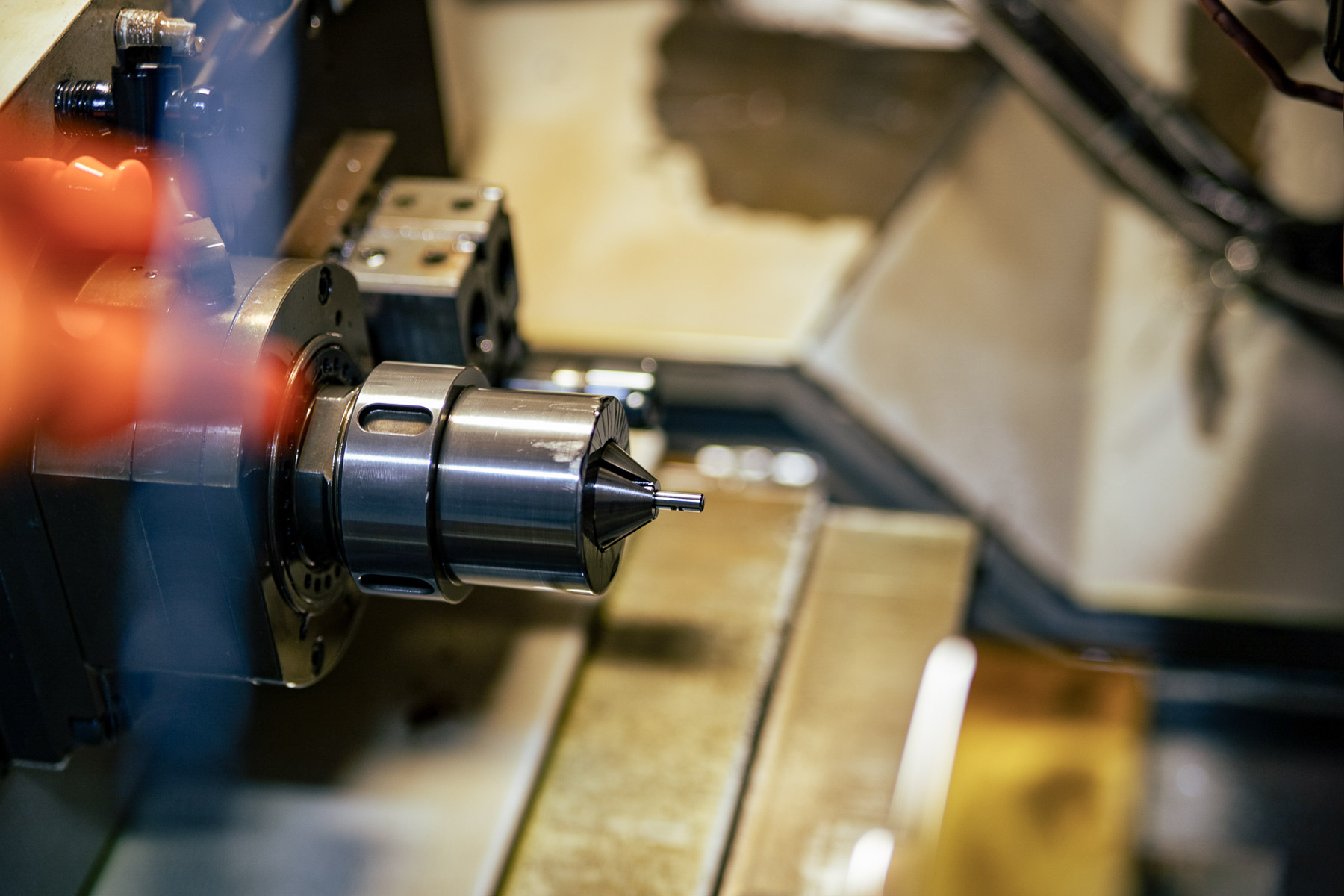
Two machining processes. A wide range of possibilities.
CNC turning and milling remove material in different ways, allowing each process to address different component geometries and features. Marshall uses both capabilities independently and alongside other manufacturing processes based on the needs of the part.
CNC Milling
During CNC milling, the workpiece remains stationary while a movable three-axis table (X, Y and Z) positions it against rotary drills, taps and cutting tools to remove material.
A range of end mills—from straight, tapered and contoured flutes to square, ball and bull-nose ends—allows different features and geometries to be produced. Milling can also incorporate drilling, tapping and boring while achieving close tolerances and smooth finishes.
Best suited for:
• Complex and intricate designs
• A wide variety of materials
• High precision and consistency
• Low- to medium-volume production
• Applications requiring adaptable machining operations
CNC Turning
During CNC turning, the workpiece is held and rotated while a mounted cutting tool moves into the turning part to remove material from its outer diameter or end. The process typically uses simple, single-point cutting tools to create straight, tapered and contoured features.
The process gets its name from the movement of the workpiece itself: rather than remaining stationary as it does during milling, the part turns as material is removed.
Turning's relatively simple tooling and setup make it a versatile option for precision components with geometries suited to a rotating workpiece.
Best suited for:
• Straight, tapered and contoured profiles
• A wide variety of materials
• Precision dimensions and tolerances
• Smooth surface finishes
• Low- through high-volume production
CNC Milling
During CNC milling, the workpiece remains stationary while a movable three-axis table (X, Y and Z) positions it against rotary drills, taps and cutting tools to remove material.
A range of end mills—from straight, tapered and contoured flutes to square, ball and bull-nose ends—allows different features and geometries to be produced. Milling can also incorporate drilling, tapping and boring while achieving close tolerances and smooth finishes.
Best suited for:
• Complex and intricate designs
• A wide variety of materials
• High precision and consistency
• Low- to medium-volume production
• Applications requiring adaptable machining operations

CNC Turning
During CNC turning, the workpiece is held and rotated while a mounted cutting tool moves into the turning part to remove material from its outer diameter or end. The process typically uses simple, single-point cutting tools to create straight, tapered and contoured features.
The process gets its name from the movement of the workpiece itself: rather than remaining stationary as it does during milling, the part turns as material is removed.
Turning's relatively simple tooling and setup make it a versatile option for precision components with geometries suited to a rotating workpiece.
Best suited for:
• Straight, tapered and contoured profiles
• A wide variety of materials
• Precision dimensions and tolerances
• Smooth surface finishes
• Low- through high-volume production

The tools behind an efficient manufacturing process.
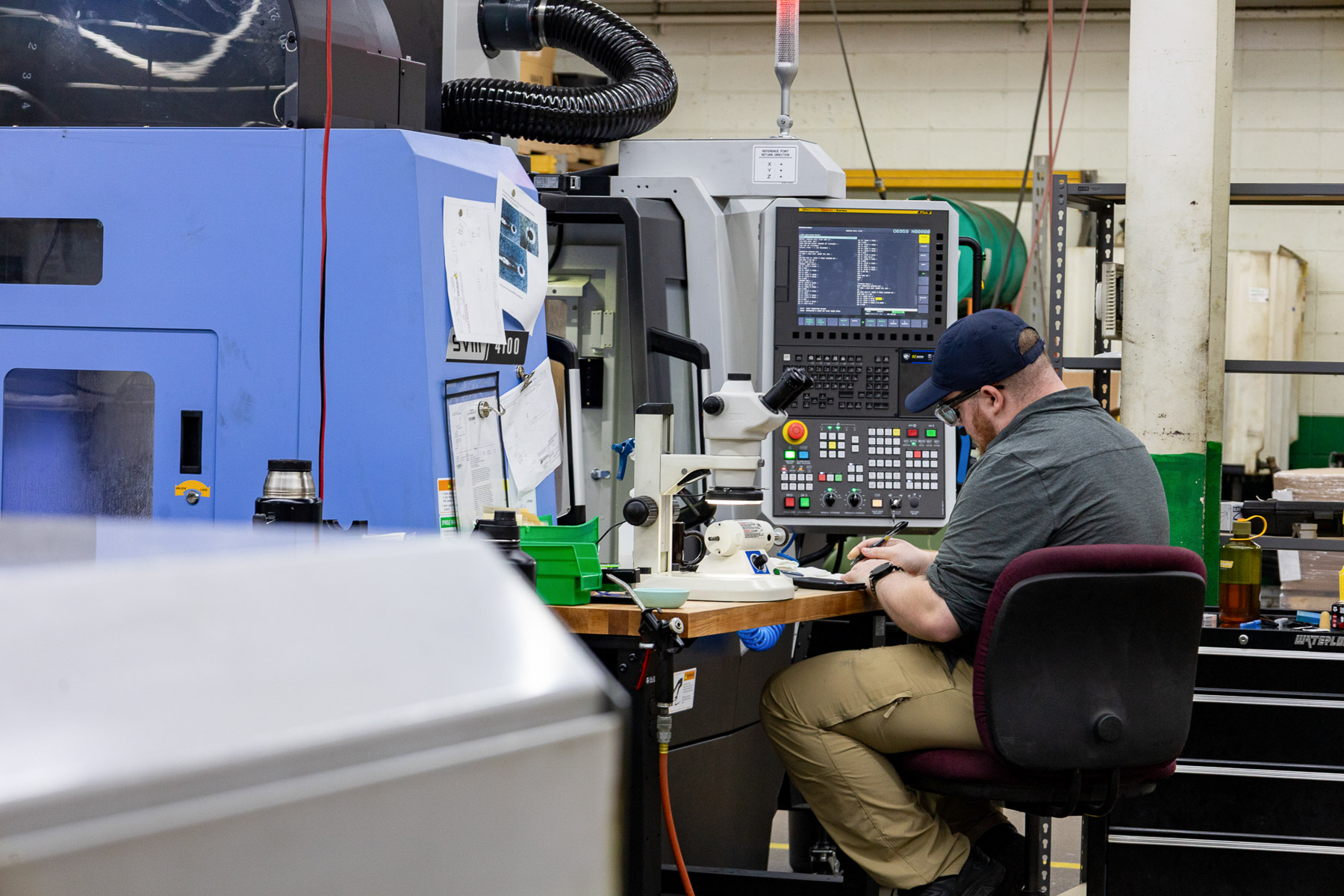
A significant portion of Marshall’s CNC turning and milling capabilities supports in-house tool making. Because custom tooling and fixtures are typically built as individual pieces rather than production quantities, these components aren't manufactured on Marshall's production equipment. Instead, our toolmakers use CNC turning centers and mills to build the specialized equipment required for individual manufacturing programs.
This includes custom tooling, holding fixtures and even complete machines designed around specific production requirements. Developed in collaboration with Marshall’s engineering team, these purpose-built tools are foundational to creating efficient manufacturing processes and consistently producing quality parts.
Flexible machining from one-off tooling to production parts.
The versatility of CNC turning and milling allows Marshall to apply these processes where they make the most sense—whether producing a custom fixture, completing a secondary machining operation or manufacturing precision components.
Material Versatility
CNC turning and milling can accommodate most metal and rigid plastic materials used across Marshall’s manufacturing programs.
Precision + Consistency
Both processes support close dimensional control, while milling and turning can achieve smooth finished surfaces when required.
Production Flexibility
Milling is well suited to low- and medium-volume applications, while turning can scale from low- to high-volume production depending on part requirements.
Integrated Manufacturing Support
In-house machining gives Marshall the ability to produce the tooling and fixtures needed to support efficient manufacturing across other capabilities.
Manufacturing solutions built around the part.
From prototype through production, Marshall works with customers to develop solutions for challenging components and assemblies. Our engineering knowledge and in-house tool design capabilities allow us to look beyond an individual machining operation and determine how a component can be manufactured efficiently and consistently.
By combining CNC turning and milling with custom tooling, fixtures and Marshall’s broader manufacturing capabilities, our team can develop cost-effective processes around the specific needs of each program.
Why manufacturers choose Marshall
Marshall's CNC turning and milling capabilities provide manufacturers with versatile solutions for precision components and complex part features. By evaluating component requirements and selecting efficient machining approaches, our team helps streamline production, manage manufacturing costs, and maintain consistent quality.
Manufacturing Flexibility
Adaptable manufacturing processes accommodate unique component specifications, evolving project needs, and varying production volumes.

Production Efficiency
Integrated capabilities and streamlined processes help reduce unnecessary production steps and accelerate delivery timelines.

Cost Optimization
Collaborative engineering helps identify cost-effective manufacturing solutions without compromising quality or performance.

Consistent Quality
Quality built into every manufacturing step helps ensure reliable components that meet applicable industry standards.
Request a Quote
Have a precision machnining project in mind?
Talk with Marshall about your component, tooling or production requirements and find the right manufacturing approach for your project.
Related manufacturing capabilities
From initial machining to final finishing, precision components often move through multiple processes. Explore the additional capabilities that help streamline production.
View All