
Metals
Manufacture precision metal components using materials selected to meet your product's specific performance, durability, and application requirements.
Experience across a wide range of metal alloys.
Marshall has experience machining a variety of metals used across precision manufacturing applications, from stainless steels and conventional alloys to specialized materials such as titanium, L605 and MP35N.
Each material brings its own combination of strength, corrosion resistance, machinability and other performance characteristics. Understanding those characteristics—and how they affect the manufacturing process—is an important part of determining the right material and production approach for a component.
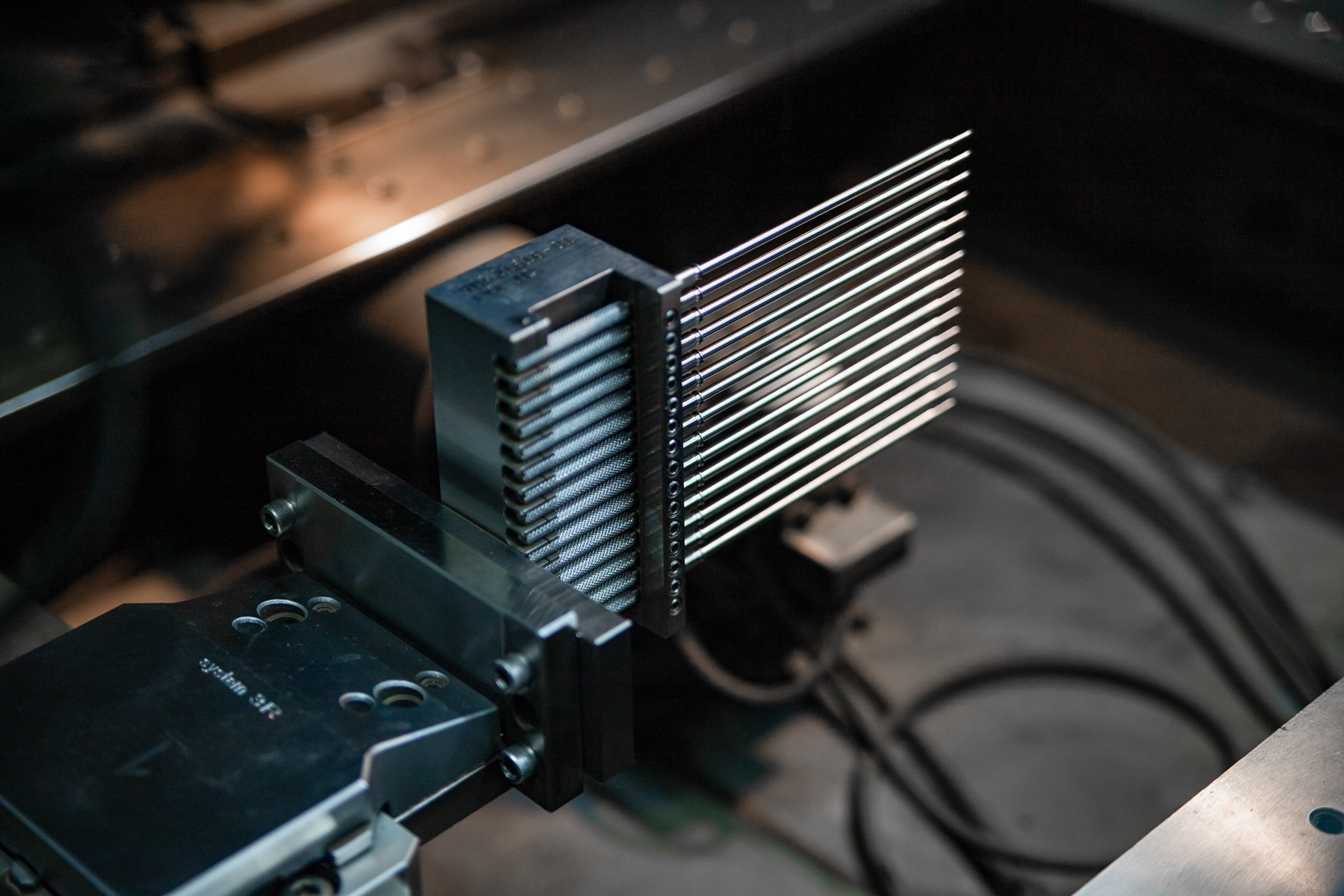
Metals we work with.
Marshall's manufacturing experience includes the following metals and alloys:
Stainless Steel
300 Series, 400 Series, 17-4 + 17-7 Series
Stainless steel offers a combination of corrosion resistance, strength, hardness, versatility and cost effectiveness.
L605
Cobalt Chrome
A high-strength, impact-resistant cobalt chrome alloy with poor machinability.
MP35N
Cobalt Chrome
A cobalt chrome alloy with poor machinability and high work-hardening characteristics.
Titanium
High strength and corrosion resistance combined with biocompatibility and high-temperature performance.
Aluminum
A lightweight, corrosion-resistant material offering high machinability, thermal conductivity and recyclability.
Brass
Offers good corrosion resistance, low friction and good machinability.
Steel
Cold Rolled + Hot Rolled Steel
High strength and durability with versatility, heat-treating potential and cost effectiveness.
Nitinol
Marshall's experience with Nitinol is specific to laser tube cutting applications.
Understand the properties that matter to the application.
The right metal isn't determined by a single characteristic. Marshall considers the requirements of the finished component alongside the properties and condition of the material being manufactured.
Tensile Strength
Different applications may require different material strength characteristics. A material with high tensile strength can withstand significant tension without breaking, while a material with lower tensile strength may offer greater compressive strength but be more brittle.
Material Condition
Applying the right material in the right condition can improve component performance. Depending on the application, this may mean selecting a very hard stainless steel or using heat-treated or cold-worked material.
Components used in more aggressive environments where corrosion is a concern may require a higher-alloyed stainless steel. In specialized applications, magnetic or nonmagnetic stainless steels may also be considered depending on the required characteristics.
Malleability
Some components require metals that can be formed or shaped without breaking. Materials such as gold, silver, brass, copper and aluminum are highly malleable. Depending on part geometry, even 17-4 PH 900 stainless steel in a fully hardened condition can be bent without fracturing.
Material decisions start with the requirements of the part.
Material selection can affect component performance, manufacturability, production time, cost and appearance. Understanding the end use and critical characteristics of the component gives Marshall's team the context needed to evaluate how a specified material will behave during manufacturing.
Where appropriate, Marshall can also help identify manufacturing considerations or alternate materials that may provide the required performance while improving manufacturability.
Why manufacturers choose Marshall
Marshall's experience machining a wide range of metals allows our team to address demanding component requirements across multiple applications. By considering material properties, machining complexity, and performance expectations, we help customers identify practical manufacturing approaches for precision metal components.

Precision Manufacturing
Advanced manufacturing capabilities for complex components, intricate geometries, and demanding dimensional requirements.

Engineering Expertise
Experienced manufacturing engineers help solve complex technical challenges and develop practical solutions for demanding component requirements.

Manufacturing Flexibility
Adaptable manufacturing processes accommodate unique component specifications, evolving project needs, and varying production volumes.

Consistent Quality
Quality built into every manufacturing step helps ensure reliable components that meet applicable industry standards.
Request a Quote
Have a material or manufacturing question?
Talk with Marshall about your component requirements, material specifications and the right manufacturing approach for your application.
Related manufacturing capabilities
Choosing the right material is just the beginning. Explore the precision machining, laser processing, and finishing capabilities Marshall uses to manufacture complex metal components.
View All